Pearl-fishers, Quinie, and the Carrier Bag Theory of Fiction
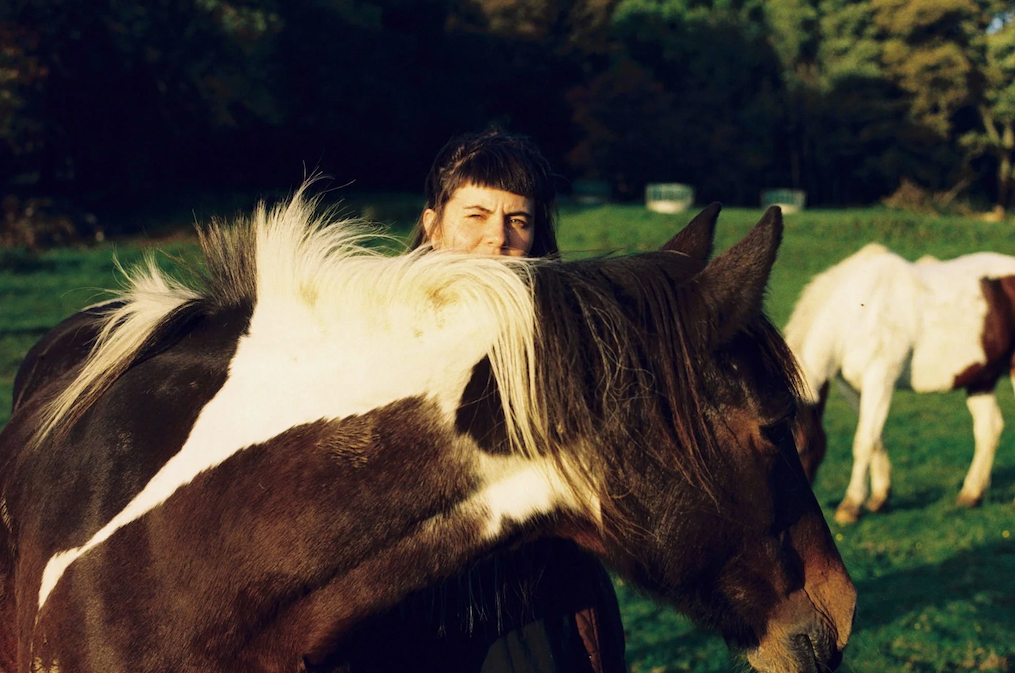
Quinie with her horse Maisie
The Summer Walkers, a book by Timothy Neat about Scottish Travellers and pearl-fishers, evocatively describes their lives, work, and culture. It explains, for instance, how Essie Stewart was given to the daughter of blind Ailidh Dall, a famous Traveller story-teller, and that informal adoptions were not uncommon in Highland communities during the first half of the 20th century, as country people sometimes handed over their unwanted babies to other people. Essie married Eddie Davies when she was sixteen and he was a dozen years older. While tin-smithing and horse-rearing were the trades for which they were best known, some of the Travellers, including Eddie and Essie, were freshwater pearl-fishers; during the summers they worked in cold rivers until darkness fell late in the evening, often sleeping in their car or on the ground. It was a life of great hardship, and eventually Eddie and Essie’s backs gave out, as did their relationship. Besides, like most of the traditional ways of the Scottish Travellers, pearl-fishing was in decline and soon to become more or less extinct.
There were uplifting moments as well as troubles in a pearl-fisher’s day. In The Summer Walkers Eddie speaks of the different kinds of gems he found, from the grey pearls of the Spey, which often had a bluish tinge, to the rose or salmon pink pearls of the Oykel, a river which also produces a few that recall the ‘blue sheen of the ling’ as well as the ‘soft red glow of the bell-heather’. There were the green, purple, and grey pearls of the River Conon, satin-white and silver-grey examples in the Laxford, and the chocolate browns of other rivers in Sutherland and Caithness. They had distinctive forms; there were egg-shaped pearls, others that looked like tiny barrels, and some that resembled buttons. The perfectly round ones were the most sought-after and valuable.
I was reminded of The Summer Walkers by ‘Forefowk, Mind Me’, a recent album by the Scottish singer Josie Vallely, known as Quinie. She became interested in unaccompanied Scottish songs after hearing Sheila Stewart, a Traveller, on the radio, and has since immersed herself in the tradition. This record, her third, was developed over several years, its main inspiration being Lizzie Higgins, another Scottish Traveller, whose singing was influenced by piping and its melodies. An unhurried journey on horseback through Argyll also helped to bring the project to fruition, the music’s pace and mood reflecting much of the county’s rugged landscape as well as the comradeship of the friends with whom she travelled and worked. Her hope, she has said, is that it will be another stone added to the cairn of Scottish song.
Quinie has written about how she was stirred by her participation in an exhibition called ‘Seized by the Left Hand’, which was based on ideas found in Ursula K. Le Guin's The Left Hand of Darkness, a novel first published in 1969 and sometimes described as ‘a masterpiece of feminist science fiction’. Like much of Le Guin’s writing, including her best-known works, the Earthsea series, it explores themes of identity, gender, power, and the balance between humanity and nature. Another touchstone was the same author’s 1986 essay The Carrier Bag Theory of Fiction, taken from the collection Dancing at the Edge of the World, in which it is suggested that the first human tool may well have been a vessel or bag, and not, as has often been thought, a weapon.
The Carrier Bag Theory of Fiction, a vigorous and provocative piece of writing, proposes that the ‘natural, proper, fitting shape of a novel’ might also be that of a sack or bag, an appropriate container for tales other than those about heroism, conflict, and conquest, stories that are typically resolved by forceful action, dominance, and exceptional individuals, who are usually men. A ‘Carrier Bag’ book, in contrast, gathers, holds, nurtures, and connects, its loose structure emphasising context, inclusivity, and mutuality, not personal triumph.
Le Guin writes: ‘If it is a human thing to do to put something you want, because it's useful, edible, or beautiful, into a bag, or a basket, or a bit of rolled bark or leaf, or a net woven of your own hair, or what have you, and then take it home with you, home being another, larger kind of pouch or bag, a container for people, and then later on you take it out and eat it or share it or store it up for winter in a solider container or put it in the medicine bundle or the shrine or the museum, the holy place, the area that contains what is sacred, and then next day you probably do much the same again - if to do that is human, if that's what it takes, then I am a human being after all’. She adds, somewhat sardonically: ’It’s clear that the Hero does not look well in this bag. He needs a stage or a pedestal, or a pinnacle. You put him in a bag and he looks like a rabbit, like a potato.’
For further exploration:
More on Scottish pearl-fishers: https://dark-mountain.net/last-summer-pearls/
Quinie’s interesting website: https://www.quinie.co.uk/
‘Col My Love’ by Quinie: https://www.youtube.com/watch?v=_YL11NflqSA&list=RD_YL11NflqSA&start_radio=1
Lizzie Higgins: https://www.youtube.com/watch?v=7zO0eHt5cRg&list=RD7zO0eHt5cRg&start_radio=1
Download ‘The Carrier Bag Theory of Fiction’: https://otherfutures.nl › uploads › documents › le-guin-the-carrier-bag-theory-of-fiction.pdf
Image on index page: Scottish Travellers in the 1930s
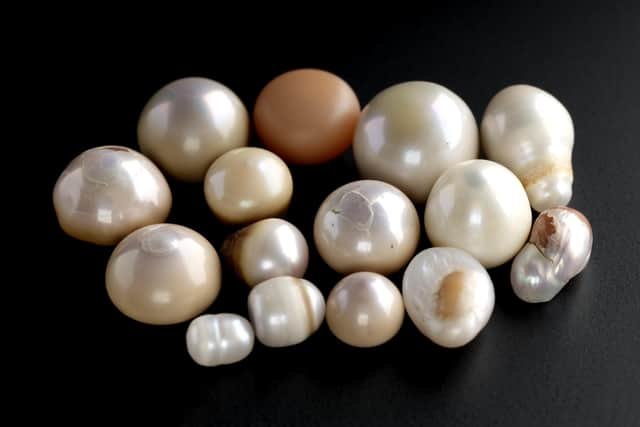
Scottish freshwater pearls