Swallows, Amazons, and the Railway Children
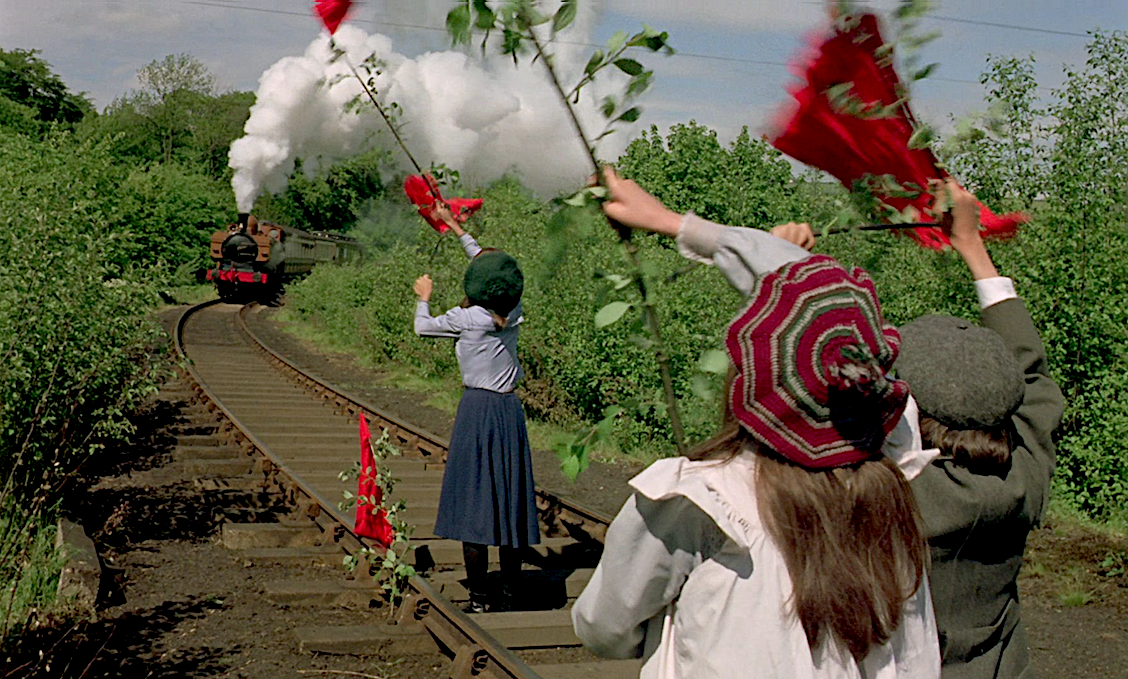
Still from ‘The Railway Children’ (1970)
As a child, I enjoyed Arthur Ransome’s classic Swallows and Amazons, published in 1930, but not as much, I’m sorry to admit, as I liked the 1974 film, which I watched many years later. I recently decided to read the second book in the series, Swallowdale, for reasons that are not entirely clear to me, and I’ve relished its slow pace, peaceful mood, and meandering plot. The children’s exploration of the hills in the Lake District reminded me of walks in the empty and atmospheric Wicklow countryside, long before it became as popular and frequented as it is now. If attraction to the Swallows and Amazons books in adulthood, a not uncommon phenomenon, is generally due to nostalgia, my own is rooted in recollections of the simplicity, openness, and comparative innocence that marked my first years of freedom after leaving school, not in idealised memories of country holidays in England, which I’ve never experienced. Having been brought up abroad, my understanding of life was not solely based on old-fashioned British values and respectable middle-class decency, even though I was familiar with such things through the influence of my parents and English boarding school. In maturity, however, I have grown to appreciate the stories’ modest and well-meaning intentions, their right-minded consideration of the views and needs of other people, and their quietly enthusiastic descriptions of nature.
While the books were based on some of Ransome’s personal experiences and ideals, his life as a whole had little resemblance to the fundamental order and tranquility that pervade them. His father was a professor with whom he had an uneasy relationship; he was sent to prep school, where he was bullied and subsequently failed scholarship exams to Rugby and Shrewsbury - although he did attend the former as a day pupil. Abandoning a university Science degree after a year, he decided to be a writer and worked as an office clerk at a publishing company in London, where he also wrote reviews and books. William Collingwood, an established writer and artist, became a friend who took him sailing and invited him to stay with his family in the Lake District; he met and married Ivy Constance Walker, with whom he had a daughter.
In 1913, following both professional and personal difficulties, Ransome travelled to Stockholm and then on to St. Petersburg, where he learnt Russian. A year later, after the outbreak of war, he began to write for an English newspaper and was sent to report on the Russian Revolution; remarkably, he managed to arrange meetings with Trotsky and Lenin. Subsequently escaping from Russia with Trotsky’s secretary, Evgenia, he was arrested on his return to England and taken to Scotland Yard, suspected of being a Russian spy or double agent. Although he was cleared, some doubt about the matter remains, but it appears likely that he was simply a maverick. In due course, having divorced his first wife, he married Evgenia and gave up both travel and political interests, exchanging them for a contented life in the Lake District, where he wrote articles, mostly about fishing, for the Manchester Guardian. His friend Collingwood’s gift of a boat called ‘Amazon’ sparked the idea of writing the Swallows and Amazons books, and over time he published a dozen of them, with great success.
At much the same age as I was introduced to Swallows and Amazons I read The Railway Children and other books by E. Nesbit; as with Ransome, my memories of them are somewhat vague and have been replaced by those of the very good film of the same name, released in 1970, which happened to feature the father of a friend - one of the reasons why I watched it at the time. Nesbit more or less invented modern English adventure stories for children, preceding Ransome by some years; she is the more complex of the two, her books occasionally containing elements of fantasy and magic, as well as references to difficult and contradictory aspects of the British middle classes. In contrast, Ransome’s stories are sober and straight-forward.
Nesbit’s life was as unusual as Ransome’s. A sensitive child with a vivid imagination, she experienced loss and displacement when her father died, leaving her twice-widowed mother, Sarah, to raise five children. As an adult, she lived through a time of financial difficulty and political upheaval; some of this unease was reflected in the gothic horror stories she wrote to make ends meet, as well as in the three books about the Bastable children, the best-known being The Story of the Treasure Seekers, which is about a family that has fallen on hard times and the children who try to improve their lot by finding or earning treasure. An active writer and lecturer on socialism, she was a founding member of the Fabian Society; she also tirelessly campaigned for the alleviation of poverty in London. Despite this earnestness, Nesbit led an unconventional personal life and enjoyed throwing extravagant parties.
The Railway Children, published in 1906, concerns a family that moves from a comfortable home in London to a much more modest house in Yorkshire near a railway, when the father, who works at the Foreign Office, is imprisoned after being accused - not unlike like Arthur Ransome - of spying. The children, Roberta (or Bobbie), Peter and Phyllis, befriend an ‘Old Gentleman’ who regularly takes a morning train near their home and eventually helps to prove their father's innocence. Before he is freed, the family takes care of a Russian exile, Mr. Szczepansky, who came to England to find his family, and Jim, the Old Gentleman’s grandson, who breaks a leg in a tunnel during a paper chase. The theme of an innocent man who is falsely imprisoned for treason and finally vindicated may have been influenced by the Dreyfus Affair, which was prominently featured in the news some years before the story was written, and the Russian exile, persecuted for writing ‘a beautiful book about poor people and how to help them’ was probably inspired by the revolutionary Sergei Stepniak and the anarchist Peter Kropotkin, who were both known to Nesbit. Well-constructed, with plenty of entertaining minor incidents, the tale is held together by themes of simple human kindness and the importance of helping people less fortunate than ourselves.
Katherine Rundell, the author of many fine contemporary books for young people, has spoken movingly of her affection for The Railway Children, which she describes as being founded on values of hope and truth, and on the understanding of emotional pain. The children, she explains, have been exiled from family togetherness and security through injustice, and suddenly, at the end of the story, they are allowed back again when the absent father returns. This, she says, is a wonderful idea; the world will often break faith with you, because it is itself broken, but sometimes it does become good, and you are embraced by pure love. In the same interview she describes her own approach to writing for children: ‘If you could tell them something, and you could guarantee that they would believe it and take it to heart, what would you tell them? The things that I want to tell them I cannot prove to be true but believe utterly to be true; they are things like ‘love will matter’, ‘hope will matter’, ‘your endurance and tenacity will matter’, and something along the lines that ‘your generosity, your self-sacrificing boldness as you move through the world, will matter’. I hope that the stories and the plot will reveal that love will give you courage, will make you brave, and will give you so much if you offer it with boldness and exuberance’.
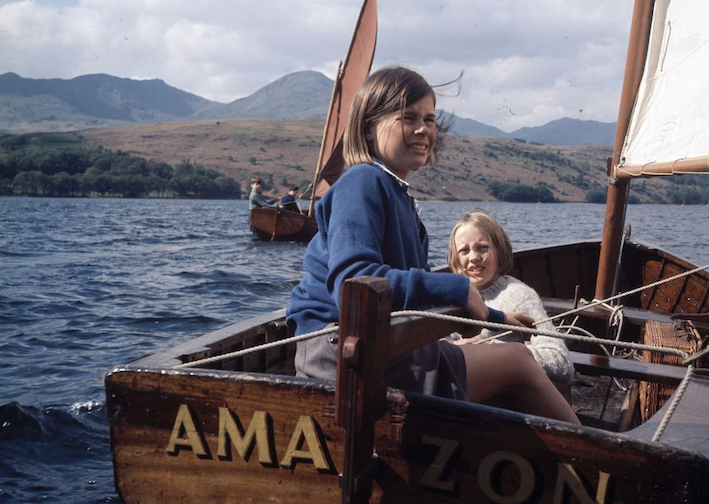
Still from ‘Swallows and Amazons’ (1974)
For further exploration:
Arthur Ransome: https://www.theguardian.com/world/2005/mar/10/russia.books
The excllent Katherine Rundell interview: https://www.youtube.com/watch?v=GQ7bkW6dvBQ
Current listening: https://www.youtube.com/watch?v=Ykd1SPJTyak&list=RDYkd1SPJTyak&start_radio=1